Reviewed · ANGKOR WAT TOURS
Shared Tour to Angkor Wat, Bayon and Ta Prohm Temples
Angkor Wat rewards time, but its scale can be hard to take in without context. This five-to-seven-hour outing pairs Cambodia’s best-known temple with Bayon and Ta Prohm, giving you a useful first look at the Angkor Archaeological Park.
I like two practical touches here: hotel pickup with air-conditioned transport (a tuk-tuk for one to three people, or a minivan for four to eight) and an English-speaking guide who can explain what you are seeing. Guides named in past experiences include Thom San, Tom and Thom-san, and visitors particularly valued their historical explanations and help with photographs.
The main catch is the extra cost: the tour is $35 per person, but the temple entrance fee is another $37. You should also expect a busy day of walking, with little time for a slow, solitary visit at each stop.
The useful details at a glance
- Three major temples in one outing: Angkor Wat, Bayon and Ta Prohm are the core stops.
- Angkor Wat gets the most time: The planned visit is three hours, compared with one hour each at Bayon and Ta Prohm.
- A quick stop at Angkor Thom’s South Gate: Allow about 20 minutes to see one of the ancient city’s five gates.
- Water and hotel transfers are included: Meals and the temple pass are not.
- Small-group cap: The maximum group size is 15 people.
- Best for a first visit with limited time: You cover several landmark sites without arranging separate transport.
A good first look at Angkor’s grandest temples
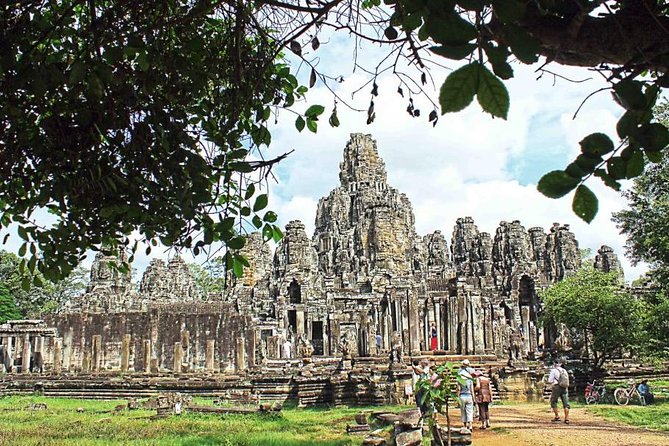
Angkor’s temple complex is spread across a broad area, and its most famous sites each have a different feel. Angkor Wat is monumental and carefully planned; Bayon is known for its sculpted faces; Ta Prohm is famous for trees and roots threading through stone. Seeing all three in one outing gives you a useful contrast, rather than a day spent with one temple alone.
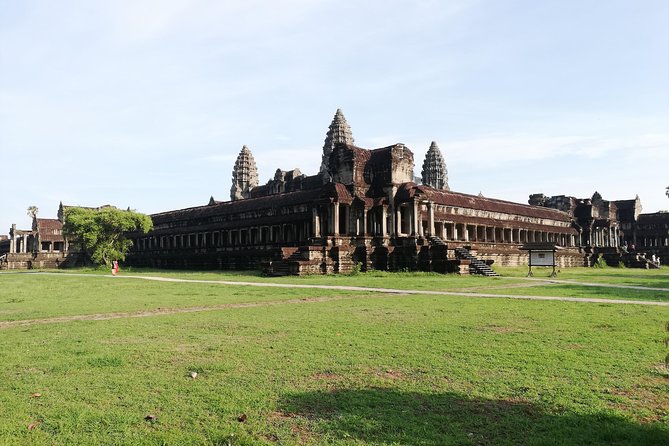
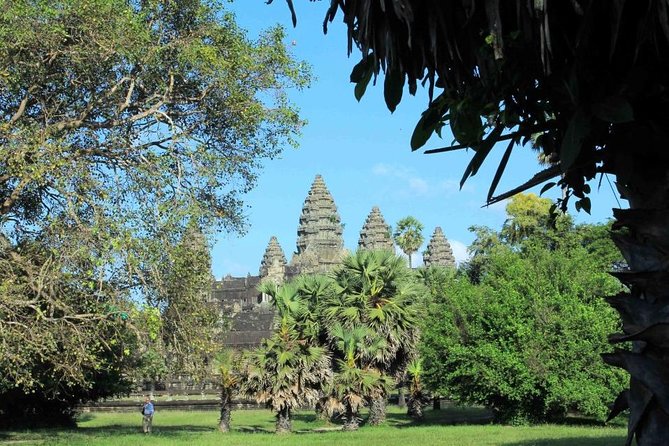
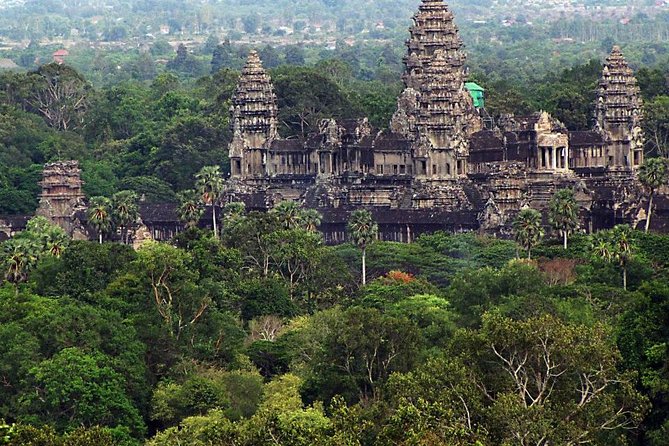
The pace is brisk, but the plan gives Angkor Wat the largest share of your time. That makes sense: it is the most extensive stop on the schedule, and the guide explains its history as you view it from outside and explore inside. Built between AD 1113 and 1150, it is more than a photogenic landmark. It is a major symbol of Cambodia, and understanding a little of its background helps the scale feel less abstract.
The tour is also practical for a first day in Siem Reap. You do not have to work out the transport between sites yourself, and a guide can help connect the buildings and gates to the wider story of the ancient city. Past visitors particularly valued guides’ explanations, friendly manner and help taking photos. Those details can make a short visit more satisfying, especially if you are still finding your bearings.
More Angkor temple tours around Siem Reap:
- Angkor Wat Sunrise or Sunset Tour with Guide from Siem Reap
★ 5.0 · 12,109 reviews - Siem Reap: Angkor Wat: Small-Group Sunrise or Sunset Tour
★ 5.0 · 9,444 reviews - Siem Reap: Angkor Wat 2-Day Tour with Sunrise and Sunset
★ 4.9 · 4,429 reviews
Angkor Wat: three hours to take in the scale
The planned three hours at Angkor Wat are the heart of the day. You see the temple from outside and go inside with your guide, who explains its history. That is a substantial block of time for a guided visit, though it will not allow you to linger indefinitely in every area or take the whole complex at your own pace.
Angkor Wat’s size is part of the challenge. From a distance, it can look like a single grand silhouette; closer up, you begin to notice the detail and the effort involved in building such a vast site. A guide helps you read the place rather than simply move through it, and several guides associated with this experience have been singled out for their command of the temples and Cambodian culture.
Photography is another practical benefit. Thom San, Tom and Thom-san are names associated with guide experiences, and visitors have appreciated guides who know useful photo spots and are willing to take pictures. You should not assume a particular guide will lead your departure, but if photography matters to you, it is reasonable to ask your guide for help once you meet.
Keep your expectations realistic. The tour offers a strong introduction, not an unhurried study of every carving and corner. If you have a keen interest in temple architecture, or want to spend a long time at Angkor Wat alone, a longer or private visit may suit you better. If your time is limited, three guided hours make a useful compromise.
Angkor Thom’s South Gate: a short stop with context
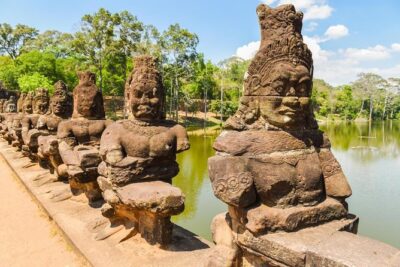
After Angkor Wat, the tour stops at the South Gate of Angkor Thom for about 20 minutes. Angkor Thom was a city with five gates: the South Gate, Ghost Gate or Gate of the Dead, Victory Gate, North Gate and Killing Gate. Each side of the city measured about three kilometres, a reminder that this was not just a temple precinct but a large urban centre.
Twenty minutes is enough for a brief look and an explanation, not a deep exploration of the whole city. Treat this as a short orientation stop. The guide can point out why the gate matters and help place it within Angkor Thom, before you continue to Bayon.
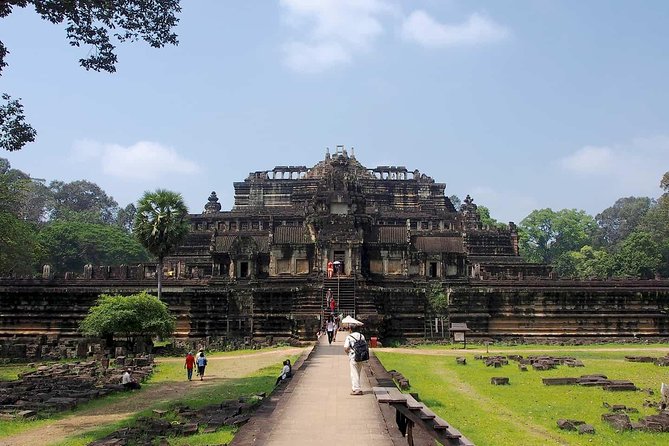
The short duration is one of the day’s trade-offs. If you are drawn to the city walls or want to inspect every feature around the gate, this schedule may feel quick. But as a bridge between the long Angkor Wat visit and Bayon, it gives you a little context without taking time away from the main temple stops.
Bayon: one hour among its stone faces
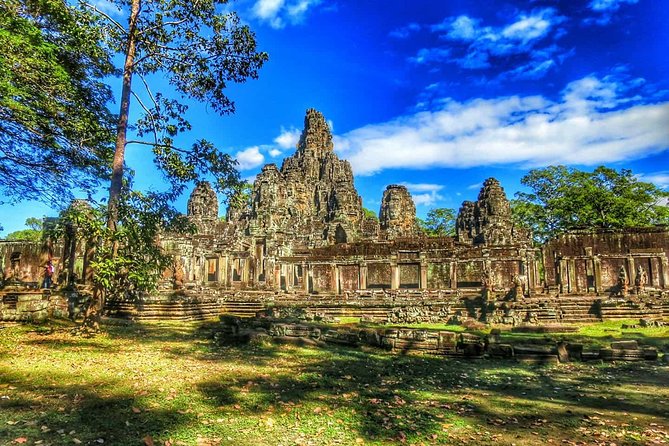
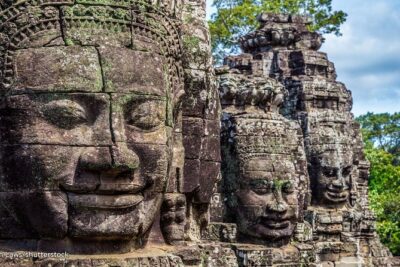
Bayon gets about an hour, with time to see it from outside and go inside with your guide. It is one of the tour’s essential contrasts with Angkor Wat. Where Angkor Wat impresses through its scale and overall design, Bayon is known for its carved faces and the distinctive character of its stone towers.
A guide is especially useful here because a short visit can otherwise become a sequence of photo stops. Ask questions as you go, and give yourself time to look closely at the stonework. Past visitors have valued guides who explain more than the ruins alone, adding details about Cambodian culture and history. That broader context can make Bayon feel connected to a living place, not only an ancient monument.
An hour is a reasonable introduction, but it is not a leisurely visit. The site is large enough that you may need to choose what to focus on. If you prefer exploring at your own pace, keep in mind that this is a shared tour with a group of up to 15, so the guide’s schedule will shape the stop.
Other Siem Reap tours worth booking
- From Siem Reap: Kampong Phluk Floating Village Tour by Boat
★ 4.9 · 6,979 reviews - Sunset tour of Kampong Phluk stilts home village on the Tonle Sap
★ 5.0 · 4,865 reviews - Siem Reap: Full-Day Angkor Wat Guided Tour with Sunset
★ 4.9 · 3,803 reviews - Angkor Wat Sunrise tour with Small – Group and Guide tours
★ 5.0 · 3,655 reviews
Ta Prohm: trees, stone and the familiar film setting
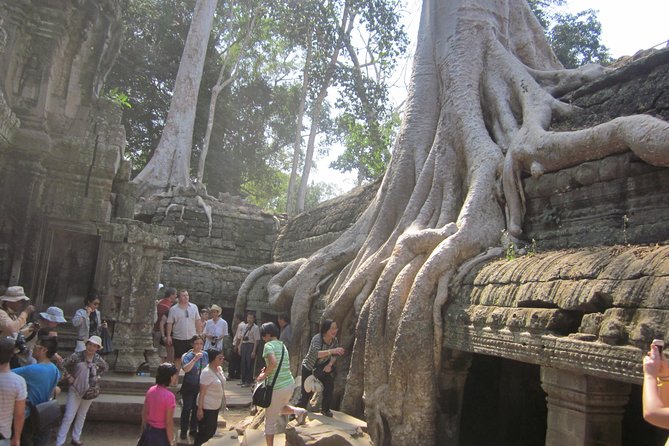
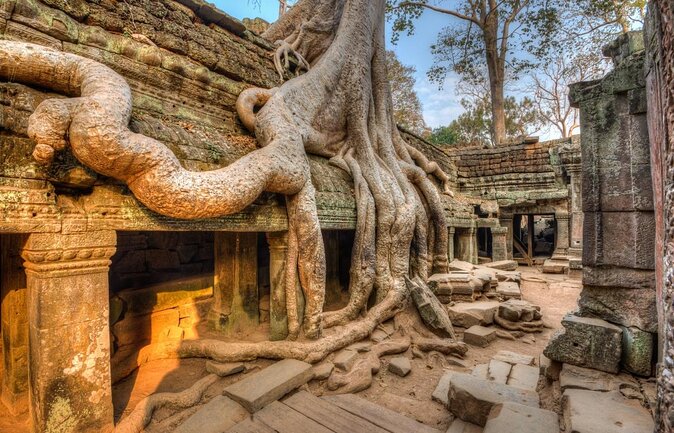
Ta Prohm is the final major temple stop, with about an hour to explore. Often called the Tree Temple, it is known for its jungle-covered ruins and the way large roots and branches press against old stone. The setting is also associated with the film Tomb Raider, which brought it to a wider audience.
The appeal here is the visible collision between nature and architecture. You see a temple whose stones are entwined with trees, rather than neatly separated from the surrounding growth. It offers a different mood from Angkor Wat’s formal scale and Bayon’s sculpted faces, so ending the temple visits here gives the day a varied finish.
The film connection is a draw, but it can also mean the setting feels familiar before you arrive. Try not to treat Ta Prohm as only a movie location. Your guide can explain the temple and its place among the area’s ruins, while the hour-long stop gives you time to look around and take photographs. As at Bayon, you will need to keep an eye on the group’s pace.
Transport, group size and the real cost
The tour costs $35 per person, with hotel pickup and drop-off, transport, an English-speaking guide and drinking water included. Transport is by tuk-tuk for groups of one to three people and by minivan for groups of four to eight. The maximum group size is 15, so ask the operator how transport is arranged if your booking party or expected group is larger than the stated vehicle groups.
The required temple entrance fee is an additional $37 per person. That brings the basic cost to $72 before meals or tips. This is the figure to use when comparing the experience with other ways of visiting, rather than focusing on the $35 tour price alone.
For that combined cost, you are paying for transport between several major sites and a guide who can explain what you are seeing. If you would otherwise need to arrange separate transport or want help understanding the temples, that can be good value. If you already have transport and prefer exploring independently, the added value of the guided portion matters more to your decision.
Meals and travel insurance are not included. Tips for the guide and driver are also not included, though they are recommended. Bring extra money for those costs, and do not assume lunch is part of the arrangement.
What to wear and bring for the day
Wear comfortable walking shoes. You will visit several temple sites, and the schedule includes time outside as well as inside the temples. You must cover your knees and shoulders when entering, so choose clothing that meets those rules before pickup rather than hoping to solve it on the way.
Drinking water is provided, which is welcome during a day of walking. You may still want to bring any other personal essentials you need. The operator advises leaving valuables behind, a sensible precaution when moving between multiple stops and walking through busy sites.
Keep your camera or phone ready if you enjoy taking photographs, but leave space for listening and looking. Guides have helped with photos and pointed out useful spots, but the most valuable part of the visit is often the explanation that helps you notice details you might otherwise pass by.
Who will get the most from this tour
This is a strong choice if it is your first visit to Angkor and you want to see its three best-known temple sites in one day. It also suits you if your schedule is tight. One visitor who had no time for a longer, two-day option still felt the shorter visit covered a lot and offered useful historical explanation.
Families and small groups may appreciate the included pickup and the chance to have a guide manage the route. One family of three found themselves as the only party with their guide, but that was a lucky arrangement, not a promise. The maximum group size is 15, so expect a shared experience unless you have arranged otherwise.
Choose a slower or longer visit if you want extended time at every site, or if you would rather set your own pace. The South Gate stop is brief, and the hour at each of Bayon and Ta Prohm is an introduction rather than a thorough exploration. This tour is about seeing the main landmarks efficiently, with explanation along the way.
Should you book this Angkor temple tour?
Book it if you want a guided first look at Angkor Wat, Bayon and Ta Prohm, and value hotel transfers and a guide more than complete freedom over the schedule. The strongest reasons are the three-hour Angkor Wat visit, the contrasting temple settings and the help guides can offer with history and photographs.
Before booking, make sure the true per-person cost works for you: $35 for the tour plus $37 for the temple entrance fee, with meals and tips extra. If that budget and brisk pace suit your plans, this is a practical way to see the headline sites in five to seven hours. If you want long, quiet visits, look for a slower option.
FAQ
How long does the tour last?
The tour lasts approximately five to seven hours. The planned temple stops are three hours at Angkor Wat, 20 minutes at Angkor Thom’s South Gate, and one hour each at Bayon and Ta Prohm.
Is the temple entrance fee included?
No. The temple entrance fee is $37 per person and is not included in the $35 tour price.
Does the tour include hotel pickup and drop-off?
Yes. Hotel pickup and drop-off are included.
What type of transport is used?
Transport is by tuk-tuk for one to three people and minivan for four to eight people.
What should I wear to the temples?
You must cover your knees and shoulders when entering the temples. Comfortable walking shoes are recommended.
Are meals included?
No. Meals are not included.
How large can the group be?
The tour has a maximum of 15 travelers.
New tours in Siem Reap
- Private Transfer From Siem Reap Airport to Hotel★ 5.0 · 16 reviews
- Siem Reap Food Tour By Local★ 5.0 · 29 reviews
- Siem Reap Airport Transfer with Fast Track Immigration Service★ 5.0 · 22 reviews
- Angkor Wat Temples & Kulen Elephant Forest Day Tour★ 5.0 · 6 reviews
- Cambodia 7 Days Tour from Siem Reap to Battambang and Phnom Penh★ 5.0 · 15 reviews
- Siem Reap Angkor Airport to Siem Reap City by Shuttle Bus★ 5.0 · 6 reviews
- Siem Reap Airport Transfers★ 3.0 · 4 reviews
- Siem Reap Airport Taxi Transfer – City Center Hotels★ 5.0 · 5 reviews
More Angkor Wat Tours worth a look.
Angkor Wat Sunrise or Sunset Tour with Guide from Siem Reap
Read our review →
Angkor Wat: Small-Group Sunrise or Sunset Tour
Read our review →
Angkor Wat 2-Day Tour with Sunrise and Sunset
Read our review →
Angkor Wat Sunrise tour with Small – Group and Guide tours
Read our review →
Angkor Wat Highlights and Sunrise Guided Tour from Siem Reap
Read our review →
Angkor Wat Sunset Small Group Tour with Lunch Included
Read our review →