
Reviewed · TONLE SAP FLOATING VILLAGE TOURS
3-Day ‘Temples & Tonle Sap’ Tour
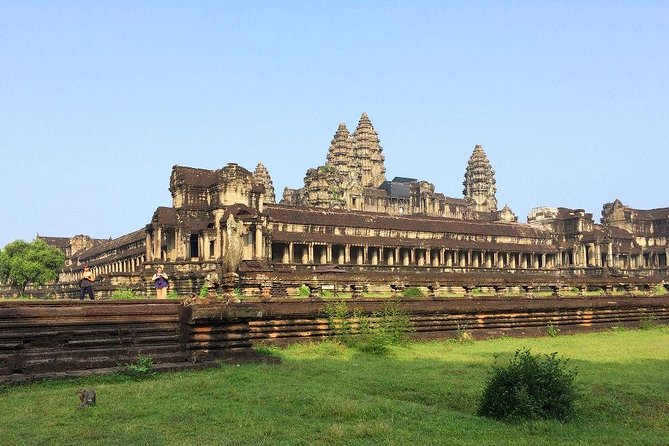
Angkor Wat is only the beginning on this three-day tour. You’ll also see Bayon’s carved faces, Ta Prohm’s tree-covered ruins, the stilt villages of Tonle Sap, and early Khmer temples at Roluos, with a guide and private transport to connect the dots.
I like two things in particular: the mix of famous temples and less-visited sites, and the included boat ride at Kampong Phluk, which adds a different side of Cambodian life to a temple-heavy visit. Hotel transfers and an English-speaking guide also take much of the planning off your plate.
The trade-off is a demanding schedule, with long days and plenty of walking. The itinerary includes an Angkor Wat sunrise on Day 2, but lists an 8:30 a.m. start time, so confirm the actual pickup time before you book.
At a glance: the useful details
- Three days cover a wide stretch of Siem Reap: Angkor’s central temples, outlying temple groups, Tonle Sap, and local markets.
- Your tour is private: only your group participates, with hotel pickup and drop-off in an air-conditioned vehicle.
- The Angkor pass costs extra: a three-day pass is listed at $62 per person; a seven-day pass is $72.
- A motorized boat ride is included: the boat fee is covered for the Kampong Phluk visit.
- Meals and drinks are on you: bottled water and cold towels are provided, but lunch, breakfast, soft drinks, and alcohol are not included.
- Expect a full-on pace: the tour is best for people comfortable walking around temple grounds for much of the day.
Three days built around temples, water, and local life
At $250, the tour’s value comes from the amount of ground it covers and the practical support it provides. A private vehicle, hotel transfers, an English-speaking guide, and the Tonle Sap boat fee are included. You still need to budget for your Angkor pass and meals, so the tour price is not the full cost of three days.
That extra coordination can be worth a lot in Siem Reap. The temple sites are spread across a broad area, and an organized route helps you see more than the central highlights without having to arrange transport between every stop yourself. The guide can also give context as you move between temples, rather than leaving each ruin as a collection of stones and photo stops.
This is an action-packed plan, not a slow retreat among the ruins. The listed visit times alone make for long days, and transfers add more time on the road. If you prefer to linger, take frequent breaks, or spend an entire morning at one temple, you may find the pace too brisk.
More floating village trips around Siem Reap:
- From Siem Reap: Kampong Phluk Floating Village Tour by Boat
★ 4.9 · 6,979 reviews - Sunset tour of Kampong Phluk stilts home village on the Tonle Sap
★ 5.0 · 4,865 reviews - Kompong Phluk Floating Village Half-Day Tour ( Morning / Sunset )
★ 5.0 · 1,494 reviews
Day 1: Bayon, Ta Prohm, and the great Angkor Wat
The first stop is the Angkor Enterprise ticket office, where you’ll need to buy your temple pass. The three-day pass is listed at $62 per person, while a seven-day pass costs $72. Admission to the temples is not included in the tour price, so factor this into your budget before you set off.
Bayon is a strong opening act. Built in the late 12th or early 13th century under King Jayavarman VII, it served as the central temple of his capital, Angkor Thom. Its carved stone faces and detailed reliefs reward a closer look, and a guide can help you make sense of what you’re seeing. Plan on about an hour here.
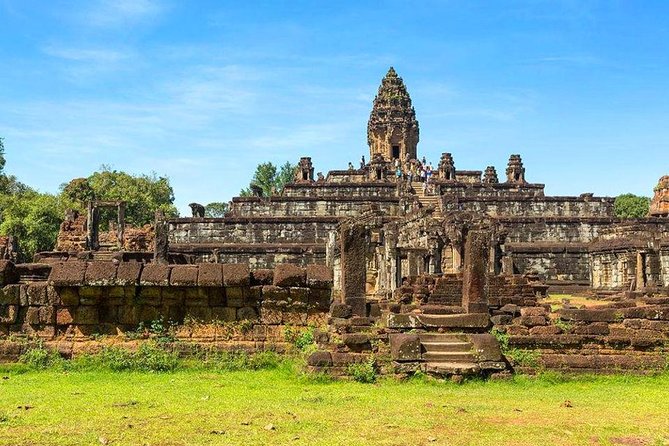
Baphuon, also within Angkor Thom, gives you a different kind of temple experience. This three-tiered temple mountain dates to the mid-11th century and was dedicated to the Hindu god Shiva. Its layered form makes it easier to picture how temple design changed over time, though uneven temple paths and stairs can make the visit tiring.
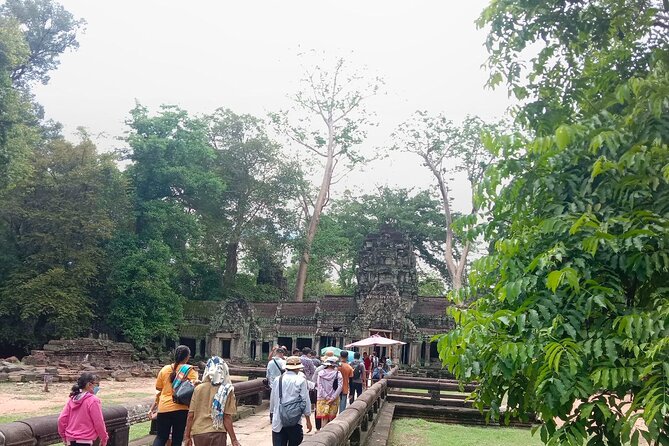
Ta Prohm is the famous ruin where large trees and their roots press against the old stonework. It was built in the late 12th and early 13th centuries and was originally called Rajavihara. Expect an hour to explore, with plenty to look at, though it can be hard to move at your own pace if the schedule is tight.
The Terrace of the Elephants offers a shorter stop, around 30 minutes. This ceremonial terrace formed part of the eastern edge of the Royal Palace grounds, facing the parade grounds. It gives you a welcome change from enclosed temple spaces and a glimpse of the public life that once took place in Angkor Thom.
After lunch, the plan allows three hours at Angkor Wat, the largest religious monument in the world by site area. Originally built as a Hindu temple, it is the central attraction of the tour and deserves more than a quick walk-through. Even with three hours, you’ll need to choose what to focus on rather than expect to inspect every corner at leisure.
The day’s final stop is Phnom Bakheng, a hilltop temple dedicated to Shiva and built in the late ninth century. The itinerary allots three hours here, but does not say exactly how that time is used. Ask the operator what to expect, especially after a full day on foot. The schedule’s listed stop times add up to a long day before transfers and lunch are counted.
Day 2: Angkor Wat at sunrise, then outlying temples
Day 2 begins with a return to Angkor Wat for sunrise, followed by a trip back to your hotel for breakfast. This is a valuable second look: the temple can feel different in early light, and visiting twice gives you a chance to notice details you missed during the previous day’s longer visit.
There is a timing question worth settling before you go. The tour’s general start time is listed as 8:30 a.m., while the itinerary places the sunrise visit first. Since the exact early pickup time is not specified, confirm when your driver will collect you. Don’t assume that 8:30 applies to the sunrise morning.
After breakfast, you visit Preah Khan, Neak Poan, Ta Som, and East Mebon. These temples are grouped in the same broad area, which makes the route more efficient than arranging each visit independently. The listed two-hour block covers all four, so expect an overview rather than a long, unhurried exploration of each site.
Banteay Srei comes after lunch. This 10th-century Hindu temple, dedicated to Shiva, lies about 25 kilometers northeast of the main Angkor area. Its distance makes the guided transport particularly useful. The tour allows two hours, enough to see why the temple is a distinct stop, though the drive also takes time.
Banteay Samre, built in the early 12th century in the Angkor Wat style, follows with about an hour. The day ends at Banteay Kdei, a Buddhist temple dating from the mid-12th to early 13th centuries. Its name means Citadel of Chambers, and the hour here rounds out a day that shifts between different periods and styles of Khmer architecture.
The day’s reach is impressive, but it is another big one. If you want to study every carving or take long breaks, ask whether the route can be adjusted. Because the tour is private, it is worth discussing your preferred pace with the operator in advance, rather than counting on extra time at each stop.
Day 3: Kampong Phluk and the earlier temples at Roluos
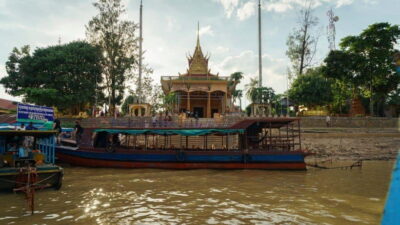
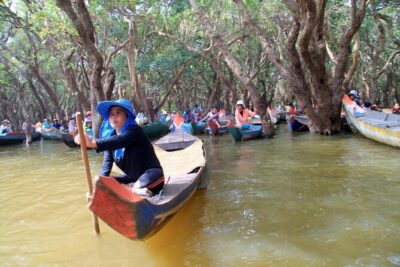
The final day takes you to Kampong Phluk, a group of villages built largely on stilts beside Tonle Sap. Fishing is central to local life, and the village’s relationship with the lake changes with the seasons. A motorized boat ride is included, giving you a view of the waterside community from the water rather than only from the road.
The listed visit is three hours. That gives the lake outing a proper place in the itinerary, rather than treating it as a brief add-on after several temple days. Still, the description does not specify the exact boat route or how much time is spent on the water versus in the village, so ask if those details matter to you.
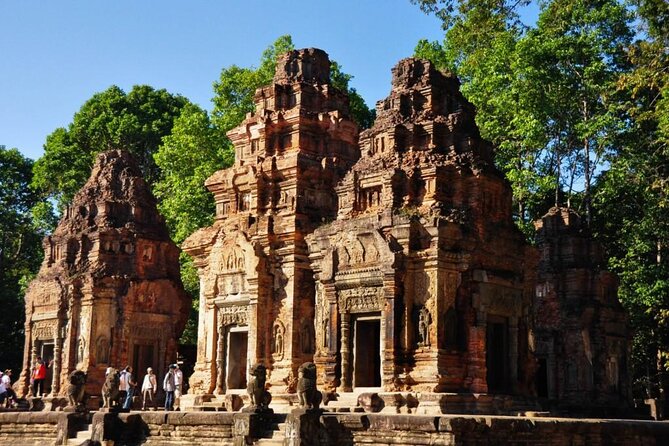
Roluos offers a look at some of the earliest permanent Khmer structures, dating from the late ninth century. These sites mark the start of the classical period of Khmer civilization, and some were built with brick. After two days among the grander Angkor temples, the earlier group helps put their development into perspective. The schedule allows three hours.
On the way back, the tour visits Phsar Leu, Phsar Chas, and Artisans d’Angkor. Phsar Leu is also called the top market, while Phsar Chas is the old market. These stops break up the archaeological focus with a look at local shopping and crafts. Two hours are allotted for the market and workshop visits, though the exact time at each is not specified.
More three-day trips around Siem Reap:
- From Siem Reap: Angkor Wat and Floating Village 3-Day Trip
★ 5.0 · 100 reviews - 3-Day Angkor Wat with All Interesting Major Temples, Banteay Srei & Beng Mealea
★ 5.0 · 70 reviews - 3-Day Angkor Wat & All Interesting Major Temples & Kulen Mount Waterfall
★ 5.0 · 63 reviews - 3 Days Siem Reap Explorer – Small Group
★ 5.0 · 50 reviews
What the $250 price covers, and what it doesn’t
The $250 price includes hotel pickup and drop-off, private air-conditioned transport, an English-speaking guide, bottled water, cold towels, and the motorized boat fee. The private format is a practical plus: your group does not have to share the vehicle or wait for unrelated participants, and there is room to discuss preferences with the guide.
Your largest extra cost is the Angkor pass. At $62 for three days, it is a significant addition for one person, but it covers the temple visits across the first two days. Meals, soft drinks, and alcohol are also excluded, so plan to pay for food separately. The tour does not specify meal stops or what you should expect to spend.
The strongest appeal is the organization: punctual transport and a professional guide matter when the route spans three busy days and several sites well beyond the central temples. No guide’s name is provided, so you cannot request a particular person based on this information.
The experience has a five-star rating from 17 reviews, with all recommending it. The praise centers on the grandeur of Angkor Wat and the quality of the organization and guiding. That is encouraging, but a small set of ratings cannot tell you whether the brisk schedule will suit your own style.
Who should book this Siem Reap tour?
I’d consider this tour if you have three days in Siem Reap and want a broad introduction without organizing transport and routes yourself. It is especially useful if you want to combine the major Angkor sites with Banteay Srei, Roluos, and a Tonle Sap village, rather than spending all your time around Angkor Thom and Angkor Wat.
It is less suited to anyone who has difficulty walking normally or has below-average fitness. The tour information specifically flags those limits, and the itinerary includes long days on foot. Children under three are not accepted.
Before booking, confirm the sunrise pickup time and ask how flexible the daily schedule is. Also check whether you are comfortable paying separately for the Angkor pass and meals. If you’re after broad coverage, private transport, and a guide to connect the sites, this is a useful, well-organized way to spend three days. If your ideal visit means lingering quietly at a few temples, a slower plan may suit you better.
FAQ
What is included in the $250 tour price?
Hotel pickup and drop-off, an air-conditioned vehicle, a professional English-speaking guide, the motorized boat fee, bottled water, and cold towels are included.
Is the Angkor temple pass included?
No. You need to buy it separately. A three-day pass is listed at $62 per person, and a seven-day pass at $72.
Are meals included?
No. Meals, soft drinks, and alcohol are not included.
Is the tour private?
Yes. It is a private activity, and only your group participates.
What time does the tour start?
The listed start time is 8:30 a.m. Day 2 includes an Angkor Wat sunrise visit before breakfast, so confirm the pickup time for that morning with the operator.
Is the boat ride at Kampong Phluk included?
Yes. The motorized boat fee is included in the tour price.
Is this tour suitable for children under three?
No. Children under three are not accepted.
Can I cancel for a refund?
You can cancel at least 24 hours before the experience starts for a full refund. Cancellations made less than 24 hours before the start time are not refunded.
New tours in Siem Reap
- Private Transfer From Siem Reap Airport to Hotel★ 5.0 · 16 reviews
- Siem Reap Food Tour By Local★ 5.0 · 29 reviews
- Siem Reap Airport Transfer with Fast Track Immigration Service★ 5.0 · 22 reviews
- Angkor Wat Temples & Kulen Elephant Forest Day Tour★ 5.0 · 6 reviews
- Cambodia 7 Days Tour from Siem Reap to Battambang and Phnom Penh★ 5.0 · 15 reviews
- Siem Reap Airport Taxi Transfer – City Center Hotels★ 5.0 · 5 reviews
- Siem Reap Angkor Airport to Siem Reap City by Shuttle Bus★ 5.0 · 6 reviews
- Siem Reap Airport Transfers★ 3.0 · 4 reviews
More Tonle Sap Floating Village Tours worth a look.
Sunset tour of Kampong Phluk stilts home village on the Tonle Sap
Read our review →
Siem Reap Floating Village Kampong Phluk Sunset with Boat
Read our review →
Kompong Phluk Floating Village Half-Day Tour ( Morning / Sunset )
Read our review →
Kulen Mountain, Beng Mealea and Tonle Sap Tour
Read our review →
Tonle Sap Lake & Kampong Phluk Village Half-Day Tour
Read our review →
Tonle Sap, Kampong Phluk & Floating Village Tour
Read our review →
Sunset Dinner Tour: Tonle Sap Lake Floating Village
Read our review →Also listed under