
Reviewed · BANTEAY SREI TOURS
Angkor Wat & Banteay Srey Tour
Angkor Wat’s carved galleries and broad moat are only the beginning of this private temple day. From Siem Reap, you’ll visit five Khmer sites, including the pink sandstone carvings at Banteay Srei and the tree-wrapped stonework at Ta Prohm, with a guide and driver to handle the long drives between them.
I like two things in particular: the range of temples, from Angkor Wat’s scale to Banteay Srei’s fine detail, and the chance to hear about Cambodian history from guides such as Kosorl Oun, Bros, or Sinann. The trade-off is a packed schedule: five stops can mean a long, hot day, and admission fees and meals are not included in the $50 price.
What to know before you go
- Five temples in one day: Angkor Wat, Bayon, Ta Prohm, Banteay Srei, and Banteay Samré each offer a different look at Khmer architecture.
- Private transport: The activity is for your group only, with hotel pickup, an air-conditioned vehicle, a driver, and a speaking guide.
- Banteay Srei is the farthest stop: It is about 35 kilometers from the main temple area, so expect a substantial drive as part of the day.
- Admission is extra: The tour price does not cover temple entrance fees, meals, personal expenses, or travel insurance.
- Guide quality is a major part of the experience: Past guests single out Kosorl Oun for his historical knowledge, care, and photography, though the guide assigned to your date may differ.
- Plan for a full day: The stated duration is about 7 to 10 hours, while the stop times alone add up to 10 hours.
A private day that covers Angkor’s range
This tour is designed to connect Angkor’s most famous sights with several temples that feel quite different in scale and style. You start with the monumental Angkor Wat, move to Bayon and Ta Prohm, then travel farther out to Banteay Srei and Banteay Samré. That variety is the day’s main strength: you are not spending every hour looking at the same kind of stonework.
A guide and driver pick you up from your hotel lobby at the time selected when you book. The first listed task is a stop at the ticket office to buy your temple pass. Since admission is not included, factor that separate expense into your budget before you set off.
The package includes air-conditioned transport, cool drinking water, and cool towels, useful comforts on a day that may last most of your waking hours. You also have a speaking guide, which matters at a site this large: stone carvings are impressive on their own, but context can help you understand what you are seeing and why each temple differs.
The tour costs $50 per person. For a private outing that includes transport and a guide, that can be a reasonable starting price, especially if you value having your own group rather than sharing a vehicle with strangers. But the advertised price is not the full day’s cost. Temple admission and meals are extra, and a sunrise visit carries an additional charge. Group discounts are offered, but no discount details are provided, so check the final price for your party before booking.
More Angkor temple tours around Siem Reap:
- Angkor Wat Sunrise or Sunset Tour with Guide from Siem Reap
★ 5.0 · 12,109 reviews - Siem Reap: Angkor Wat: Small-Group Sunrise or Sunset Tour
★ 5.0 · 9,444 reviews - Siem Reap: Angkor Wat 2-Day Tour with Sunrise and Sunset
★ 4.9 · 4,429 reviews
Angkor Wat: three hours with the headline temple
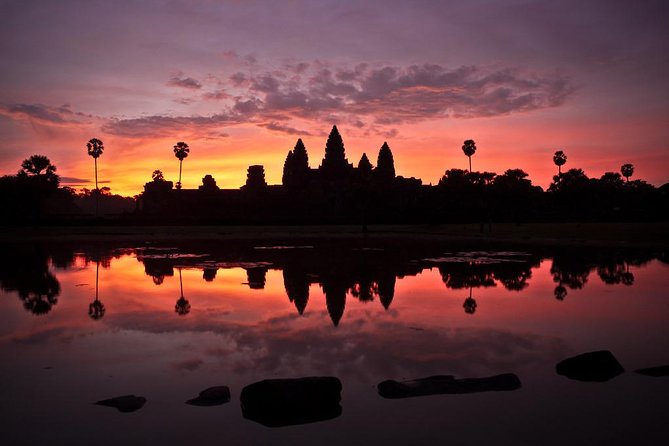
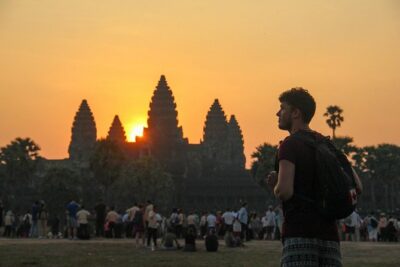
Angkor Wat is the day’s natural centerpiece. Built under Suryavarman II between 1113 and 1150, it is described as the largest and most famous Khmer temple. Its height, moat, and extensive bas-reliefs give you plenty to take in before you even get to the interior galleries.
The tour allows three hours here. That is a generous share of the day and gives you time to look beyond the broad exterior views. Pay attention to the carved scenes on the walls, as well as the way the temple’s scale changes your sense of distance as you move through it. Your guide can help connect the visual details with the temple’s history.
The listing places Angkor Wat at 65 meters high and notes that a large moat surrounds it. Those features help explain why a quick photo stop would not do the site justice. Still, three hours is only one part of a day with four further temples, so expect to keep moving rather than linger indefinitely.
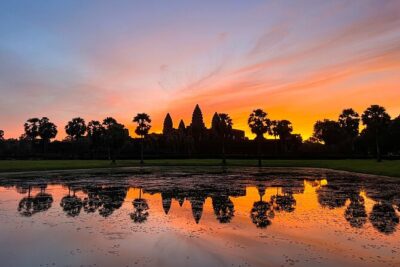
Sunrise is not automatically included. An extra charge applies if you want that option, so ask about it when arranging your plans. The available information does not specify the sunrise pickup time or exactly how it affects the schedule.
Bayon: towers and a forest of carved faces
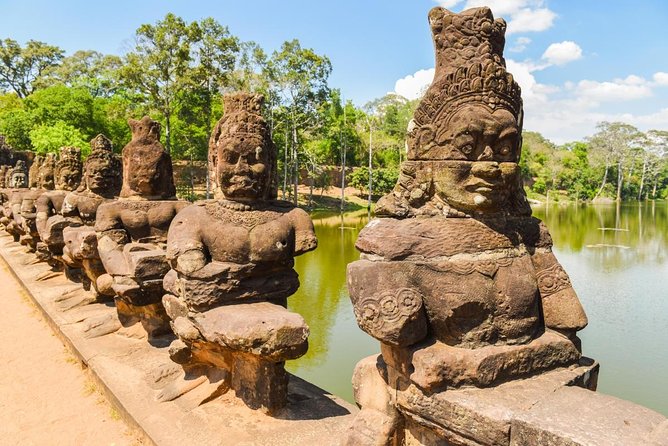
The next stop is Bayon, a Buddhist-style temple built in the late 12th or early 13th century under Jayavarman VII. The temple is known for its 54 towers and more than 200 carved smiling faces. That repeated imagery gives Bayon a distinct character after Angkor Wat’s broad, carefully planned monumentality.
You have two hours here. Use the time to look up as well as around: the faces are carved high on the towers, and their expressions shift with your angle and the light. A guide can also help explain the temple’s place in the reign of Jayavarman VII and its connection to the Khmer capital.
Bayon’s history includes damage during Cham attacks, but the site remains an especially striking stop for its sculpted towers. The description calls it Bayon or Angkor Thom; they are not interchangeable names in ordinary use, so confirm with your guide which specific areas are included in this two-hour visit.
Ta Prohm: stonework held by trees
Ta Prohm offers a sharp change of mood. Built in the late 12th century and dedicated in 1186 to Jayavarman VII’s mother, it began as a Buddhist temple and was later converted to Hindu worship. Some Buddhist galleries were altered, and Hindu symbols, including yoni and lingam, were added.
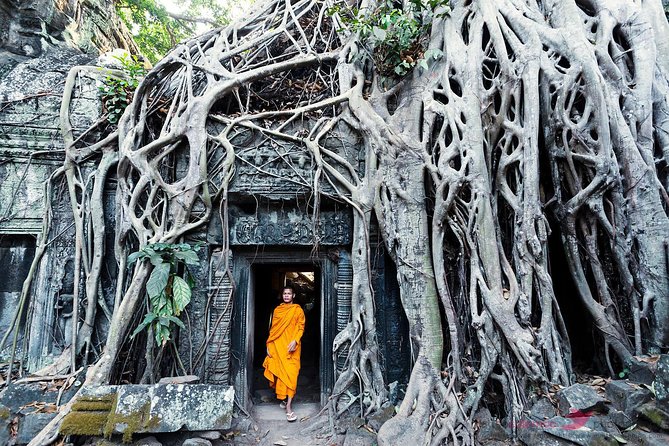
The temple is best known for trees growing over and through its sandstone walls. The huge roots and old masonry make the site visually memorable, but they can also draw your eyes away from the carved stone itself. Take time to notice both: the trees are not a separate decoration, they are part of what makes this place feel unlike the more open temple complexes.
The scheduled visit is two hours, and Ta Prohm is about 1.5 kilometers from Bayon by way of the Victory Gate. That short distance between stops is a welcome pause in a day that later includes a longer drive. The tour’s description mentions the trees by the local name Spung.
More Banteay Srei trips around Siem Reap:
- Full-Day Banteay Srei & 4 Temples – Grand Tours Join-in Tour
★ 5.0 · 1,155 reviews - Siem Reap Tour: Angkor Wat Sunrise, Bayon, Ta Prohm, Banteay Srei
★ 5.0 · 931 reviews - 2-Day Angkor Wat With Small, Big Circuit and Banteay Srei Tour
★ 5.0 · 545 reviews - From Siem Reap: Banteay Srei Temple & Grand 5 Temple Tour
★ 4.8 · 262 reviews
Banteay Srei: delicate pink sandstone
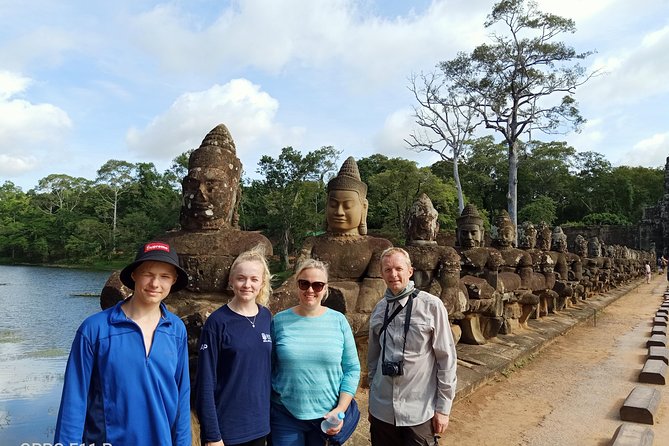
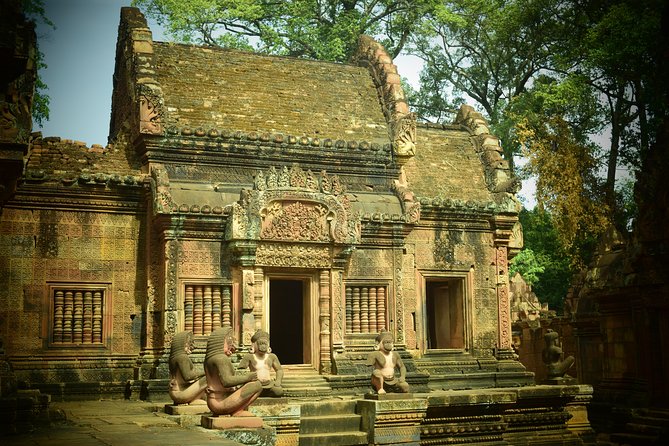
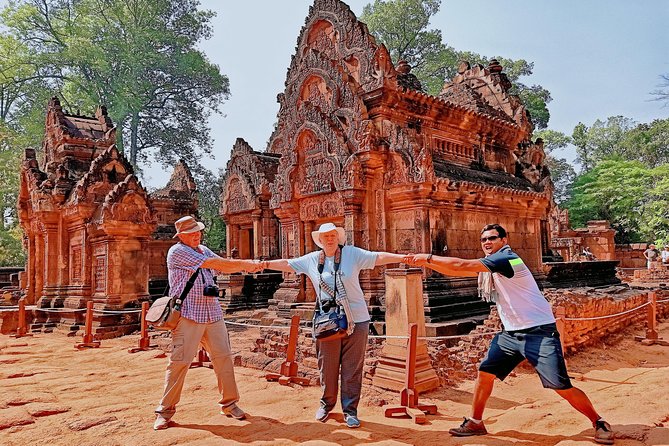
Banteay Srei is about 35 kilometers from the main temple area, making it the day’s significant out-of-town stop. Its pink sandstone and detailed carvings set it apart from the larger temples. The name Lady Temple is associated with its fine, delicate work, a useful reminder that impressive architecture is not always about size.
You have two hours at the site. That gives you a chance to take in the carvings at a slower pace after the denser sequence of Angkor Wat, Bayon, and Ta Prohm. The drive is part of the cost in time, so this stop makes the most sense if you want a broader picture of the Angkor temples, not just the central highlights.
On the way, there may be an opportunity to stop and see local producers making natural sugar products from sugar palm. The wording suggests this is an optional possibility, not a guaranteed scheduled demonstration. If it matters to you, ask the guide whether the stop can be included on your date.
Banteay Samré: a quieter final temple
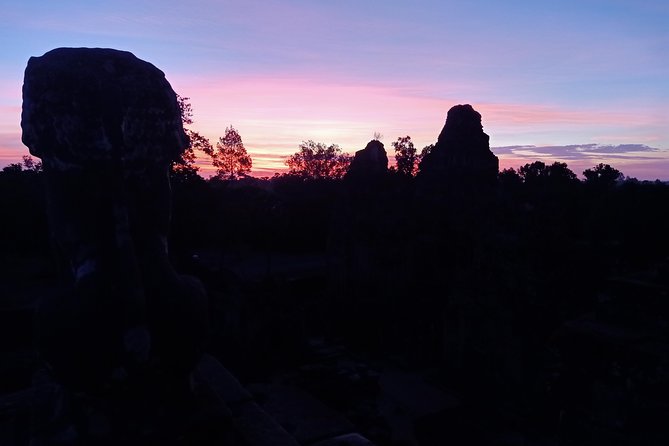
The final listed stop is Banteay Samré, about 400 meters east of the East Baray. Built in the early 12th century during the reigns of Suryavarman II and Yasovarman II, it is a Hindu temple in the Angkor Wat style.
The visit is listed as one hour, which makes it the shortest stop of the day. After the larger sites and the drive to Banteay Srei, this can be a concise final look at another temple with a different setting and architectural relationship to Angkor Wat. The schedule does not explain whether the order of the last two temples can change, so ask your guide if you have a preference.
Including Banteay Samré gives the tour a fuller scope than a central-temples circuit. The cost is time and energy. If you are already tired by late afternoon, you may appreciate the air-conditioned ride more than another hour on foot.
The guide can shape the day
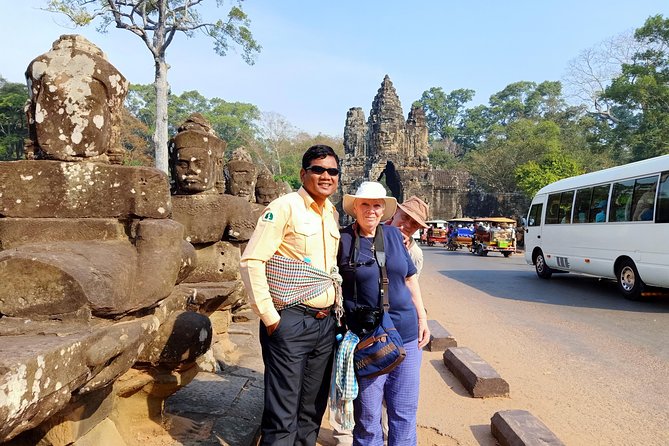
The strongest feature beyond the temples is the personal guide. Past accounts name Kosorl Oun, Bros, and Sinann, with Kosorl especially associated with explaining Cambodian history, adapting to people’s needs, and taking creative photographs. One account also describes a guide stepping in at short notice when another guide became ill, suggesting that the assigned guide can vary.
You should not assume a specific guide is guaranteed unless the operator confirms it. But the detail in these accounts points to what you can reasonably ask for: historical explanation, practical help, and a conversation that includes present-day Cambodia as well as ancient sites. One past guest also appreciated hearing about the Khmer Rouge, a difficult but important part of the country’s recent history.
Photography has been a notable strength for Kosorl in particular. If you want photos of your group, ask your guide early in the day rather than waiting until the final stop. And if you would rather spend more time on one temple or move at a slower pace, say so. The activity is private, but the listed visit lengths and full route make it worth discussing your priorities before the day begins.
Timing, cost, and comfort
The tour is advertised as lasting 7 to 10 hours, but the listed temple visits total 10 hours: three at Angkor Wat, two each at Bayon, Ta Prohm, and Banteay Srei, and one at Banteay Samré. That total does not include the drives, hotel pickup, ticket-office stop, or meal breaks. Treat this as a full-day outing and confirm the expected return time.
You are supplied with drinking water and cool towels, while meals are not included. Bring money for food and other personal expenses, and plan for the separate entrance fee. The tour description does not state how much time is allotted for lunch or where you will eat, so check with the operator if you need a more precise schedule.
The private format is valuable if you want a guide focused on your group and a vehicle between temples. It may be less attractive if you prefer a short visit to just the main sites or want to keep costs low by joining a shared group. Most travelers can participate, according to the tour details, but no specific accessibility arrangements are described. If steep steps or walking are a concern, ask about the route and pace before booking.
Free cancellation is available up to 24 hours before the start time for a full refund. Changes or cancellations made within 24 hours are not accepted for a refund, and the cutoff follows local time.
Should you book this temple circuit?
Book this tour if you want a private, guided overview of five temples and are comfortable spending most of the day on the road and on foot. It suits first-time visitors who want Angkor Wat’s major landmarks alongside the distinctive carvings at Banteay Srei and the tree-covered ruins at Ta Prohm.
Think twice if you have only a few hours, want a relaxed pace, or need a firm total cost before paying. The $50 price excludes admission and meals, the sunrise option costs extra, and the listed stop times already fill a long day. Ask which guide is assigned, confirm the full cost and schedule, and decide whether all five stops match your energy and interests. If they do, the private format and breadth of sites make this a practical way to see more than Angkor Wat alone.
FAQ
Is this a private tour?
Yes. Only your group participates in the activity.
Is hotel pickup included?
Yes. Pickup is offered from your hotel, with the guide or driver meeting you in the hotel lobby at the time selected when booking.
How long does the tour last?
The stated duration is about 7 to 10 hours. The listed temple visits add up to 10 hours, before allowing for travel and other stops.
Which temples are included?
The route lists Angkor Wat, Bayon Temple, Ta Prohm Temple, Banteay Srei, and Banteay Samré.
Are temple entrance fees included?
No. Entrance fees are not included. The tour description says you will go to the ticket office to buy a temple pass.
What is included in the $50 price?
Air-conditioned transportation, cool towels, cool drinking water, a speaking guide, and a driver are included.
Are meals included?
No. Breakfast, lunch, and dinner are listed as not included.
Is sunrise included?
No. Sunrise has an extra charge.
Can I cancel for a full refund?
Yes, if you cancel at least 24 hours before the experience’s start time. Cancellations within 24 hours are not refundable, and the cutoff uses local time.
New tours in Siem Reap
- Private Transfer From Siem Reap Airport to Hotel★ 5.0 · 16 reviews
- Siem Reap Food Tour By Local★ 5.0 · 29 reviews
- Siem Reap Airport Transfer with Fast Track Immigration Service★ 5.0 · 22 reviews
- Angkor Wat Temples & Kulen Elephant Forest Day Tour★ 5.0 · 6 reviews
- Cambodia 7 Days Tour from Siem Reap to Battambang and Phnom Penh★ 5.0 · 15 reviews
- Siem Reap Airport Taxi Transfer – City Center Hotels★ 5.0 · 5 reviews
- Siem Reap Angkor Airport to Siem Reap City by Shuttle Bus★ 5.0 · 6 reviews
- Siem Reap Airport Transfers★ 3.0 · 4 reviews
More Banteay Srei Tours worth a look.
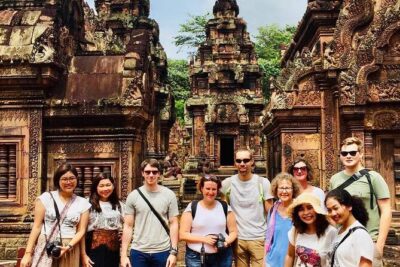
Full-Day Banteay Srei & 4 Temples – Grand Tours Join-in Tour
Read our review →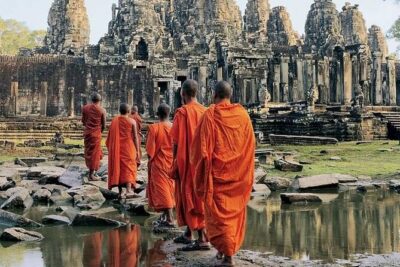
Siem Reap Tour: Angkor Wat Sunrise, Bayon, Ta Prohm, Banteay Srei
Read our review →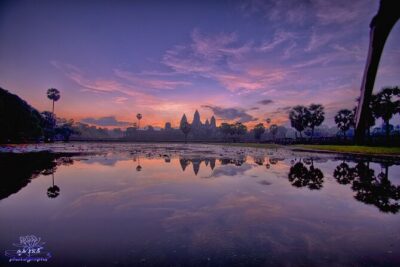
2-Day Angkor Wat With Small, Big Circuit and Banteay Srei Tour
Read our review →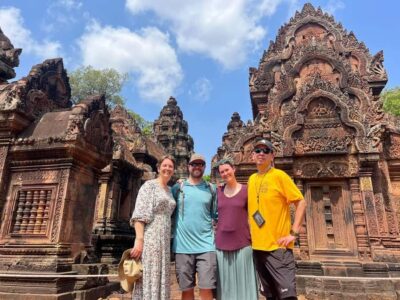
3-Days Discovery Of Angkor: Waterfalls,Floating Village and Banteay Srei temple
Read our review →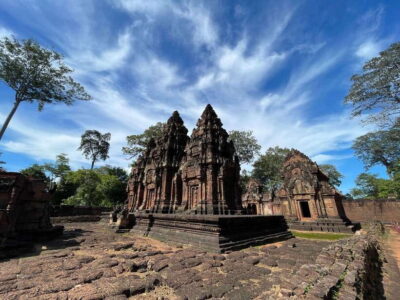
Banteay Srei, Kulen Waterfall & Beng Mealea Exploration
Read our review →
2-Day Angkor Wat Tour with Banteay Srei and Floating Village
Read our review →Also listed under