
Reviewed · ANGKOR WAT SUNRISE TOURS
Siem Reap: 2-Day Temple Highlights Sunrise and Sunset Option
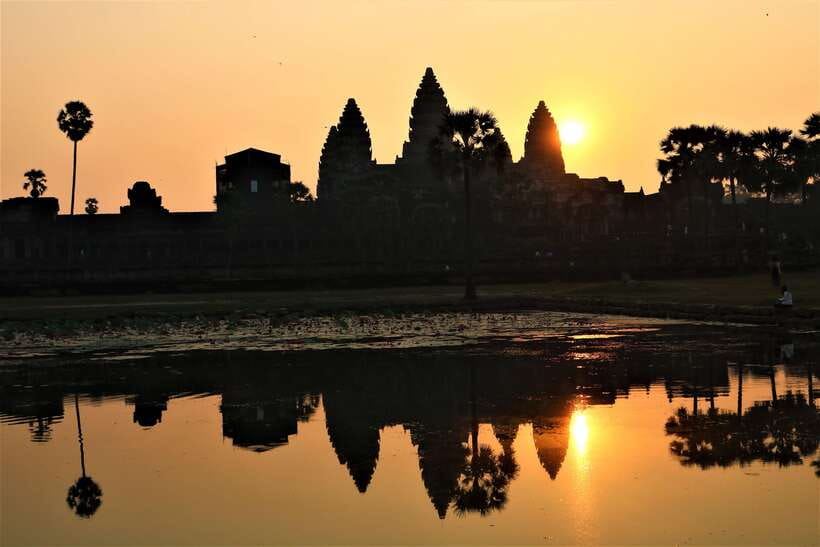
Angkor Wat at first light is the great hook: you enter before sunrise, approach through quieter eastern corridors, then watch the temple take shape in the dawn. I like that this two-day route pairs the famous monuments with smaller, moodier sites, and that an English-speaking guide can explain the Hindu and Buddhist stories behind the stone.
I also like the practical comforts: hotel pickup, air-conditioning, bottled water, and cool towels after temple walks. The trade-off is the early alarm and a lot of walking in the heat. Budget separately for the $62 temple pass, and check which sunset option applies to your booking.
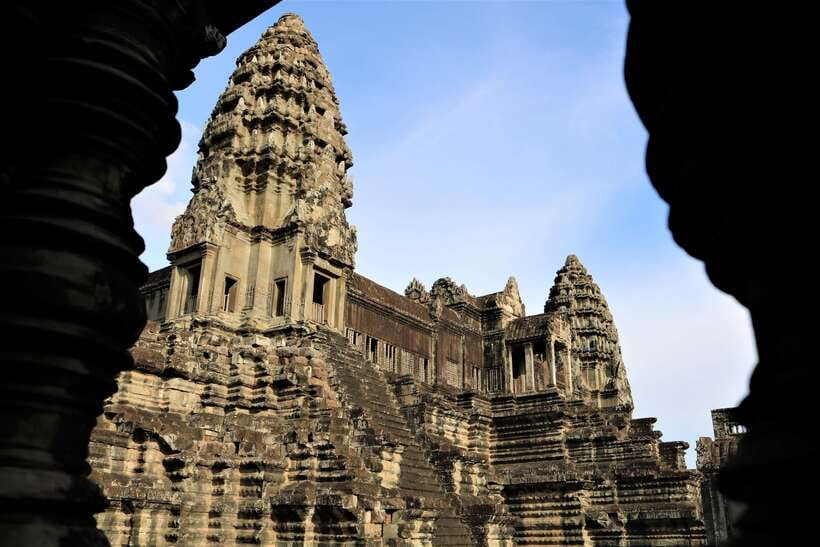
- Sunrise, with a quieter approach: Enter Angkor Wat from the eastern side before dawn, then explore its galleries after sunrise.
- Big names and smaller sites: The route includes Angkor Wat, Bayon, Ta Prohm, Banteay Srei, Preah Khan, Pre Rup, Neak Pean, and Ta Nei.
- A guide who adds context: Guides such as Chhay, Sak, Pal, Bun, and Pi have been praised for explaining Khmer history, religion, and temple symbolism in clear English.
- Cool breaks between temple walks: Air-conditioned transport, bottled water, and cool towels help make long, hot days more manageable.
- Two sunset formats: Small groups go to Bakheng Temple; the private option includes a drink among Siem Reap’s rice fields.
- The ticket is extra: The advertised $46 price does not include the $62 two- or three-day temple pass or meals.
Two days to see Angkor beyond the postcard
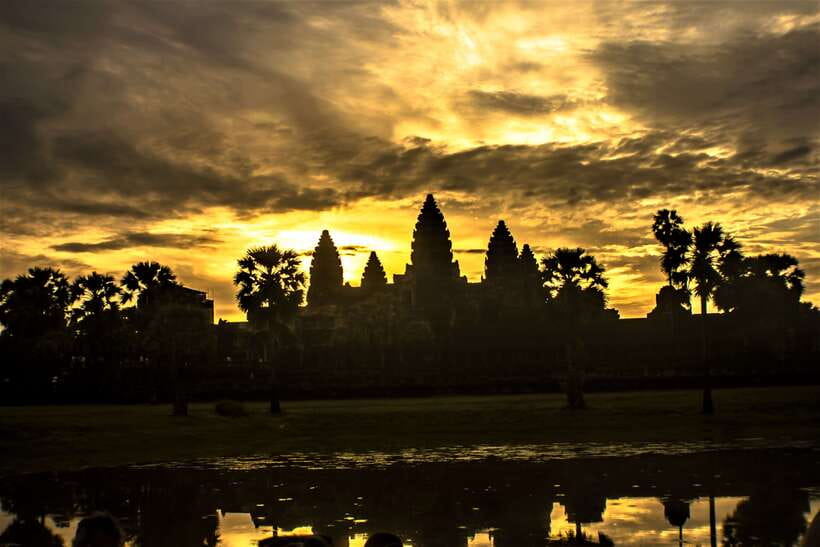
Angkor is not one temple with a few interesting ruins nearby. It is a vast archaeological area, and the sites differ in scale, setting, religious meaning, and condition. This tour gives you two full days to move between its best-known monuments and quieter corners without having to plan each transfer yourself.
The balance is a real strength. You get the immense stone galleries of Angkor Wat and the many-faced towers of Bayon, but also the delicate carvings at Banteay Srei and the tangled, tree-lined ruins of Ta Prohm and Preah Khan. Those contrasts help the temples feel like distinct places, not a long procession of similar stone.
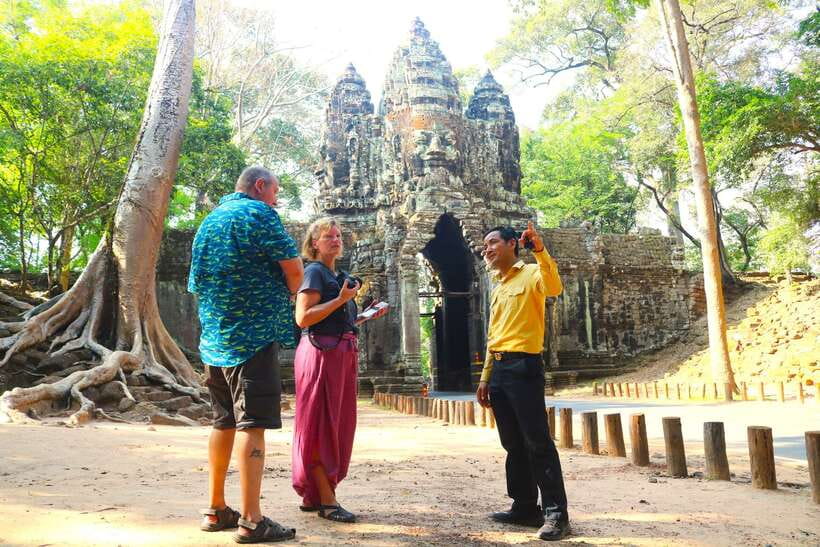
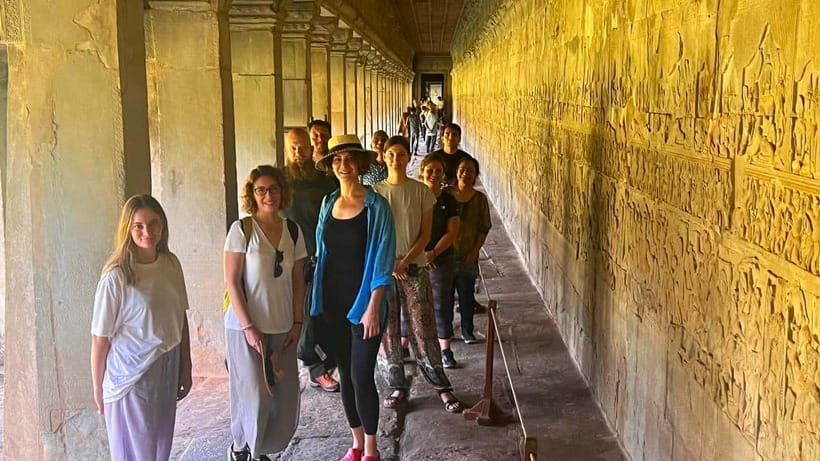
A licensed English-speaking guide leads the visits and provides historical and religious context. The best guides on this route, including Chhay, Sak, Pal, Bun, and Pi, are praised for combining dates and stories with explanations of Hinduism, Buddhism, Khmer culture, and temple symbolism. You can ask questions, and guides have also helped with photographs and pointed out less crowded places to pause.
The tour is listed at $46 per person, but the admission pass is not included. The required two- or three-day pass costs $62 per person, bringing the basic total to at least $108 before meals. That is worth factoring in when comparing this guided trip with arranging transport on your own: here, the price also covers hotel transfers, a guide, and the convenience of a planned route across two busy days.
Day one: Pre Rup, Banteay Srei, Neak Pean, and Preah Khan
The first day focuses on temples outside Angkor Thom. It starts at Pre Rup, a Hindu temple built as a state temple for King Rajendravarman and dedicated in 961 or early 962. Brick, laterite, and sandstone give the temple a different look from the larger sandstone monuments you will see later.
Pre Rup is a temple mountain, so its stepped form helps explain how Khmer rulers used temple architecture to represent sacred mountains. It is also an atmospheric place to begin, though climbing and walking over uneven stone can be tiring. Take your time, wear shoes with good grip, and save some energy for the rest of the day.
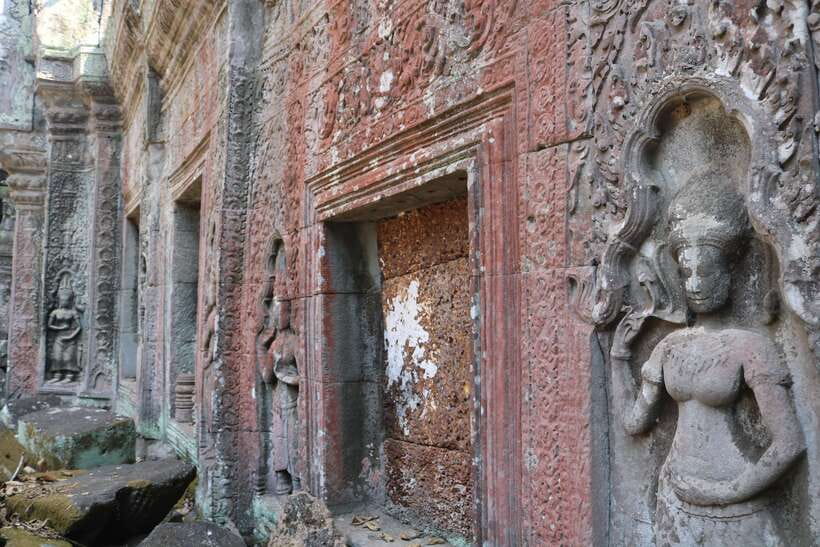
Banteay Srei is smaller than Angkor Wat, but its finely worked sandstone carvings reward a close look. The reliefs are known for their precision and detail, and the change of scale offers a welcome pause from the grander temple complexes. A guide can help you notice figures and patterns that are easy to pass by when you are simply moving through the site.
The temple became accessible only in the late 1990s, after the Khmer Rouge left the area. That modern history adds another layer to the visit: these monuments are not only relics of the Khmer Empire, but places shaped by Cambodia’s more recent past as well.
Neak Pean offers a different kind of setting. It is an artificial island with a Buddhist temple on a circular island in Jayatataka Baray, an ancient reservoir. Rather than the imposing towers and galleries of the major sites, the appeal here comes from its unusual island arrangement and the surrounding water. The experience can depend on conditions at the site, so think of it as a brief, distinctive stop rather than a temple to compare with Angkor Wat.
Preah Khan rounds out the temple visits with a more ruined, intimate feel. Commissioned by Jayavarman VII in honor of his father, it combines crumbling stone and tree roots, with sections restored by the World Monuments Fund. Some areas are in remarkably good condition, while others retain the rough, overgrown character that makes the site feel different from a carefully preserved monument.
I like this day’s mix of sites: Banteay Srei’s fine detail, Neak Pean’s island design, and Preah Khan’s atmospheric decay each offer a different way to read Angkor. The drawback is distance. These temples are spread out, so the air-conditioned vehicle matters, but you should still expect plenty of walking once you arrive.
The day ends with a sunset stop. Small-group tours visit Bakheng Temple, while the private option includes a drink in Siem Reap’s rice fields. These are different settings, so check which is included in the option you are booking. Bakheng offers a temple setting for sunset; the rice-field stop is a quieter way to close the day outside the main monuments.
More sunrise tours around Siem Reap:
- Angkor Wat Sunrise or Sunset Tour with Guide from Siem Reap
★ 5.0 · 12,109 reviews - Siem Reap: Angkor Wat: Small-Group Sunrise or Sunset Tour
★ 5.0 · 9,444 reviews - Siem Reap: Angkor Wat 2-Day Tour with Sunrise and Sunset
★ 4.9 · 4,429 reviews
Day two: Angkor Wat at sunrise
The second day begins before dawn. Bring a torch, as the approach is made in darkness, and expect an early pickup from your hotel. The route enters Angkor Wat from its eastern side, described as a less-visited approach, then passes through cloistered corridors toward the temple’s long stretch of bas-relief carvings.
Sunrise is a fine reason to accept the early alarm. You see Angkor Wat before the full day’s heat, and the changing light reveals the scale of the temple gradually. The setting can be busy, and a good viewing spot is never something to take for granted, but guides familiar with the timing can help you get into position. After sunrise, you explore the temple itself rather than treating it as a quick photo stop.
The eastern entry also changes the feel of the visit. Instead of arriving only for the familiar frontal view, you move through the temple’s corridors and galleries. The bas-reliefs are especially worth a slower look. They stretch for a remarkable distance, and your guide can point out scenes and details that might otherwise blur into a wall of carved stone.
Breakfast is outside the temple and is not included in the tour price. Meals are excluded throughout the two days, so bring money for food and plan for a breakfast stop after the early start. Some tour groups have also stopped for lunch on day one, but your meals remain your own expense.
Ta Prohm and Ta Nei: two different kinds of quiet
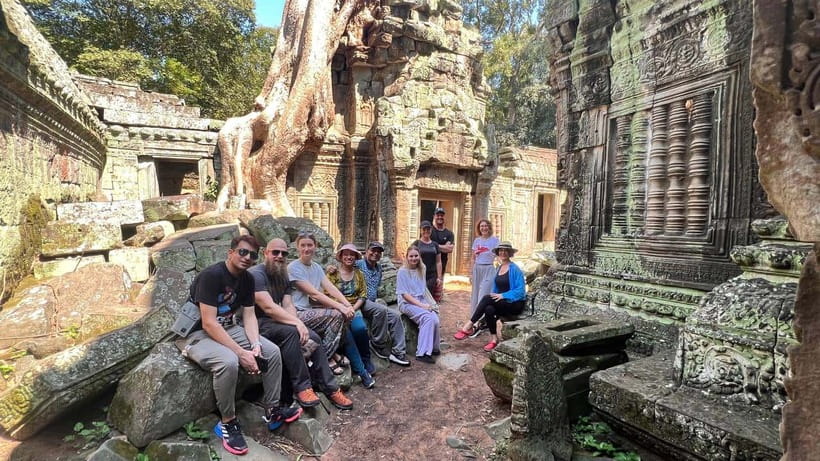
After breakfast, the route continues to Ta Prohm, one of Angkor’s most atmospheric temples. Trees and roots press against its stone structures, and the site retains much of the look that made it famous after French explorer Henri Mouhot encountered it in the 1850s. It was once home to 2,740 monks, a detail that helps you picture it as a working religious community rather than simply a photogenic ruin.
Ta Prohm is popular, so it may not feel quiet. Still, the larger site offers many passages and corners to explore, and the contrast between living roots and carved stone makes it one of the most memorable stops. It is also uneven underfoot, so watch your footing and avoid rushing to keep up with a photo opportunity.
Ta Nei, a late 12th-century stone temple, provides a smaller counterpoint. It is less imposing than Angkor Wat and less famous than Ta Prohm, but that is part of the appeal. A stop at a more modest site gives your eye a break from monumental scale and helps make clear how many different kinds of temples belong to the Angkor area.
Angkor Thom and the faces of Bayon
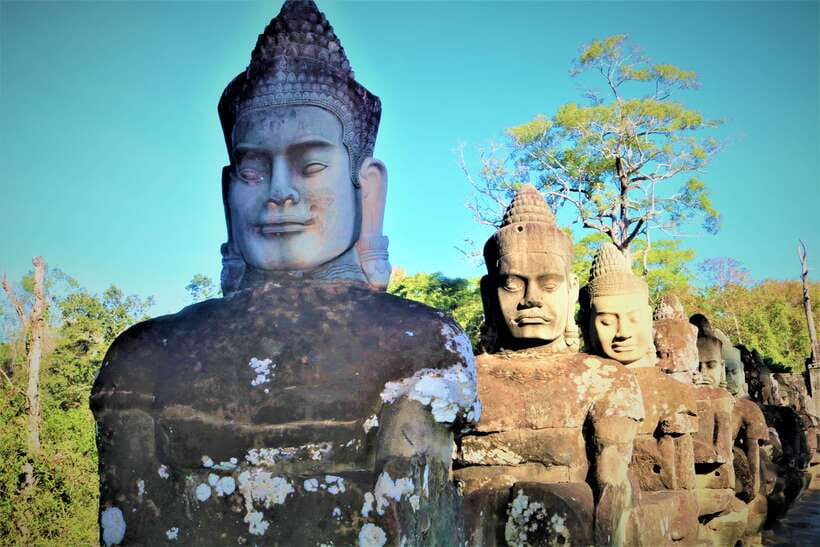
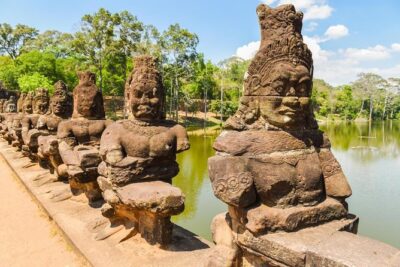
The tour then visits the southern gate of Angkor Thom, the fortified city. Its entrance is flanked by 54 stone figures on each side, gods to the left and demons to the right. The arrangement is more than decorative: it offers a striking introduction to the stories and beliefs that shaped Khmer temple design.
Inside Angkor Thom, the Bayon is the main event. Its central towers carry more than 200 enormous carved faces, giving the temple a presence that feels quite unlike Angkor Wat’s long galleries and balanced symmetry. Take a moment to look up and around as you move through the site. The faces appear from different angles, and a guide can explain what scholars and local traditions associate with them without reducing the temple to a single interpretation.
The final visits include the Terrace of the Elephants and the Terrace of the Leper King. These carved platforms help show how Angkor Thom functioned as a royal city, not just a collection of religious monuments. They are also a fitting end to a route that moves from grand temples to a fortified center and its civic spaces.
The schedule is full, and two days of temple walking can wear you down. Reviews of the tour often praise guides for pacing the visits sensibly and adjusting to the group’s energy. You may still want to keep expectations flexible: the route covers many sites, so time at each one is finite, and a longer stay at every temple is not realistic.
More sunset tours around Siem Reap:
- Sunset tour of Kampong Phluk stilts home village on the Tonle Sap
★ 5.0 · 4,865 reviews - Siem Reap: Full-Day Angkor Wat Guided Tour with Sunset
★ 4.9 · 3,803 reviews - Angkor Wat Sunset Small Group Tour with Lunch Included
★ 5.0 · 3,059 reviews - Angkor 2-Day Sunset & Sunrise Small-Group Tour
★ 5.0 · 2,567 reviews
Why the guide and driver matter
The temples are impressive on their own, but an English-speaking guide can turn a visit into something more than a sequence of architectural stops. Guides including Chhay, Sak, Pal, Bun, and Pi have been singled out for explaining religious symbolism, Khmer history, and Cambodian culture in an engaging way. Several also help with photos and answer questions during drives between sites.
That time in the vehicle is useful. A good guide can prepare you for what you are about to see, then connect one temple to the next. If you have a particular interest, such as Hindu mythology, Buddhism, Khmer kings, or the construction of the temples, ask about it. The tour can feel more personal when you take an active part rather than waiting for a set speech at every stop.
The driver is an important part of the experience too. Hotel pickup and drop-off are included, and the vehicle is air-conditioned. Bottled water and cool towels are provided, small comforts that matter after walking around exposed stone in Cambodian heat. Drivers named in past tours, including Vichet, Kea, Mao, and Naroo, have been praised for being punctual and attentive, but the specific staff on your departure may differ.
Small-group departures are available, and the group size can vary. A smaller group makes it easier to hear the guide and move together, though you should not assume every departure will have the same number of people. Private tours offer a different sunset stop and may allow more room to tailor the day, but the supplied details do not give a separate private-tour price.
What to budget, pack, and consider
At $46, the tour price is appealing, but it is not the full cost of visiting Angkor. Add $62 per person for the two- or three-day temple pass, plus meals. The pass is a substantial part of your budget, so compare the combined cost rather than the tour price alone.
Wear comfortable walking shoes and clothing that covers your shoulders and knees. Shorts are not allowed, and respectful dress is required at the temples. Insect repellent is also on the suggested packing list. Bring a torch for the pre-dawn approach to Angkor Wat, and carry some spending money for meals.
This tour is not wheelchair accessible and is not suitable for wheelchair users or people with mobility impairments. The route involves walking around temple grounds, and the stone surfaces can be uneven. It is also not suitable for children under eight. Even if you are comfortable walking, the two-day schedule and sunrise start make this a demanding outing.
Free cancellation is available up to 24 hours in advance, and you can reserve now and pay later. Those terms are useful if your plans are still taking shape, but the practical decision is simpler: make sure you can manage the early start, the walking, and the extra admission cost.
Should you book the two-day temple tour?
I would book this if you want to see Angkor’s major temples and several smaller sites without organizing transport between them yourself. The route has a good range, the guide adds historical and religious context, and the air-conditioned vehicle, cold water, and towels make the heat easier to handle. Sunrise at Angkor Wat is the standout moment, while Banteay Srei, Preah Khan, and Ta Prohm keep the visit from becoming a greatest-hits march.
Look elsewhere if you want long, unhurried stretches at just one or two temples, cannot manage uneven ground, or would rather set every stop and meal at your own pace. Before booking, confirm whether your departure includes the Bakheng sunset or the private rice-field drink, then add the temple pass and meals to your budget. If that schedule and total cost suit you, this is a strong, practical way to make two days in Angkor count.
FAQ
How long is the tour?
The tour lasts two days. It includes an early start for sunrise at Angkor Wat on the second day.
What temples are included?
The route includes Angkor Wat, Angkor Thom and Bayon, Ta Prohm, Ta Nei, Pre Rup, Banteay Srei, Neak Pean, and Preah Khan. The sunset stop depends on the tour option.
Is the Angkor temple pass included?
No. The two- or three-day temple pass costs $62 per person and is not included in the $46 tour price.
Are meals included?
No. Meals are not included. Breakfast is scheduled outside Angkor Wat after sunrise, and you should budget separately for food.
What is included in the tour price?
Hotel pickup and drop-off, air-conditioned transport, a licensed English-speaking guide, bottled water, and cool towels are included. The sunset drink is included for the private option.
Where does the tour go for sunset?
The small-group option visits Bakheng Temple. The private option includes a drink in Siem Reap’s rice fields.
What should I bring and wear?
Bring comfortable shoes and insect repellent. Wear clothing that covers your shoulders and knees, and bring a torch for the pre-dawn Angkor Wat visit. Shorts are not allowed.
Is the tour suitable for children or people with mobility impairments?
It is not suitable for children under eight, people with mobility impairments, or wheelchair users. The activity is not wheelchair accessible.
More two-day trips around Siem Reap
- 2 Days Exclusive Temple Highlights with Sunset and Sunrise Tour
★ 5.0 · 1,157 reviews - Siem Reap: Angkor Sunrise 1- or 2-Day Guided Temples Tour
★ 4.9 · 1,132 reviews - 2 Days Guided Historical Tour in Angkor
★ 5.0 · 855 reviews - 2-Day Angkor Wat With Small, Big Circuit and Banteay Srei Tour
★ 5.0 · 545 reviews
New tours in Siem Reap
- Private Transfer From Siem Reap Airport to Hotel★ 5.0 · 16 reviews
- Siem Reap Food Tour By Local★ 5.0 · 29 reviews
- Siem Reap Airport Transfer with Fast Track Immigration Service★ 5.0 · 22 reviews
- Angkor Wat Temples & Kulen Elephant Forest Day Tour★ 5.0 · 6 reviews
- Cambodia 7 Days Tour from Siem Reap to Battambang and Phnom Penh★ 5.0 · 15 reviews
- Siem Reap Angkor Airport to Siem Reap City by Shuttle Bus★ 5.0 · 6 reviews
- Siem Reap Airport Transfers★ 3.0 · 4 reviews
- Siem Reap Airport Taxi Transfer – City Center Hotels★ 5.0 · 5 reviews
More Angkor Wat Sunrise Tours worth a look.
Angkor Wat Sunrise or Sunset Tour with Guide from Siem Reap
Read our review →
Angkor Wat: Small-Group Sunrise or Sunset Tour
Read our review →
Angkor Wat 2-Day Tour with Sunrise and Sunset
Read our review →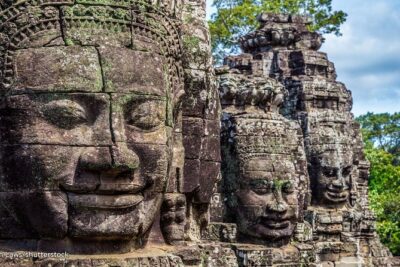
Angkor Wat Sunrise tour with Small – Group and Guide tours
Read our review →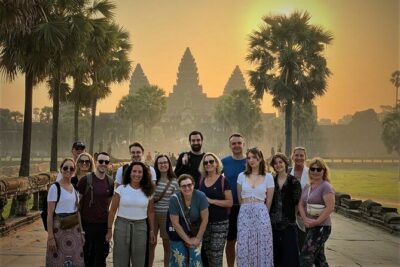
Angkor Wat Highlights and Sunrise Guided Tour from Siem Reap
Read our review →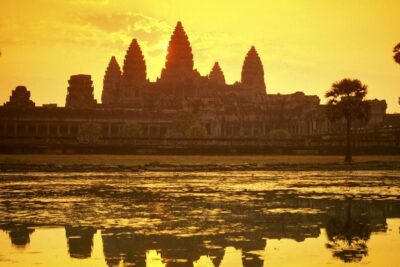
Full-Day Angkor Wat Sunrise Private Tour with Guide from Siem Reap
Read our review →
Angkor Wat Sunrise & 3 Main Temples with Breakfast – Small Group
Read our review →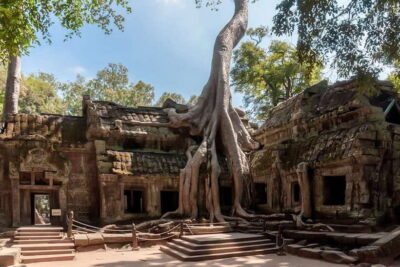
Angkor Wat Sunrise and Full-Day Sightseeing Tour
Read our review →Also listed under