
Reviewed · SIEM REAP WAR MUSEUM TOURS
Siem Reap City Tour with War Museum and Killing Field
Siem Reap is known for Angkor’s temples, but this five-hour tour turns your attention to Cambodia’s more recent past and its living craft traditions. At the War Museum, you’ll see military equipment and hear personal accounts; at Wat Thmey, you’ll visit a memorial site connected to the Khmer Rouge era.
I like that the day pairs serious historical stops with a working craft center, then leaves time for the Old Market. I also like the practical setup: a private vehicle, an English-speaking guide, hotel pickup, and admission to the museum and Wat Thmey are included. One consideration: the Killing Fields visit is sobering, and the tour moves through four stops in about five hours, so it is a compact introduction rather than an unhurried study of each place.
What to know before you go
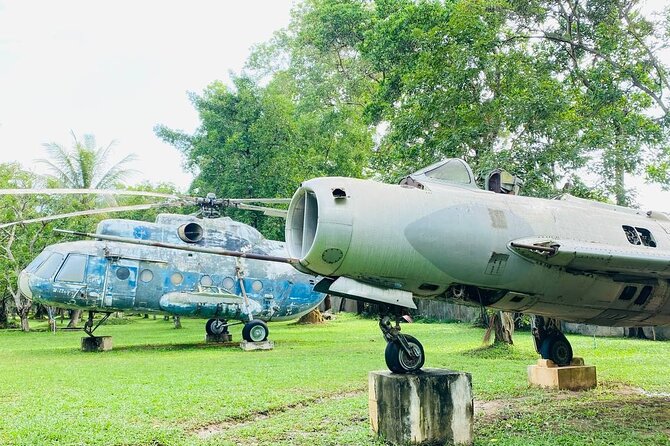
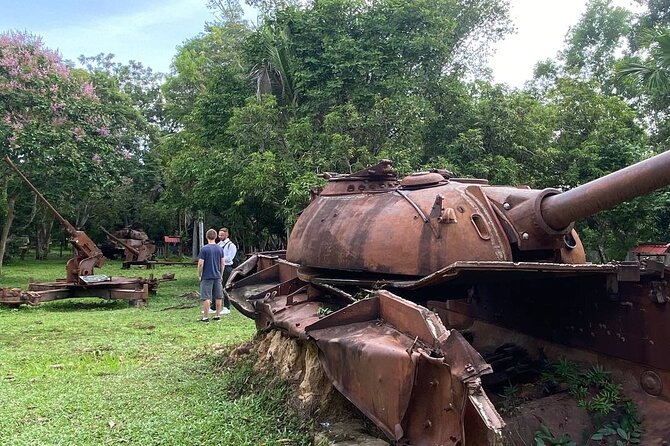
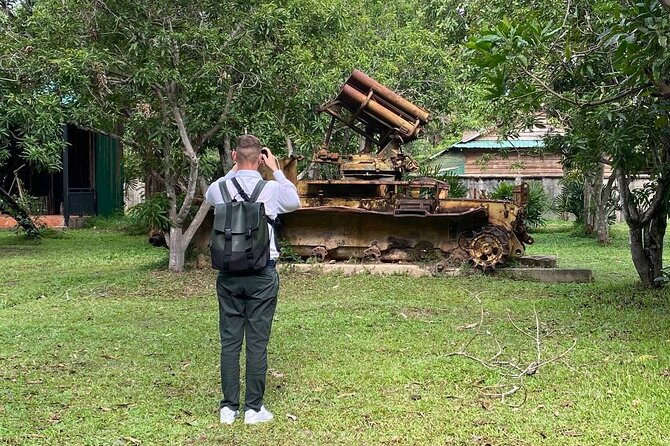
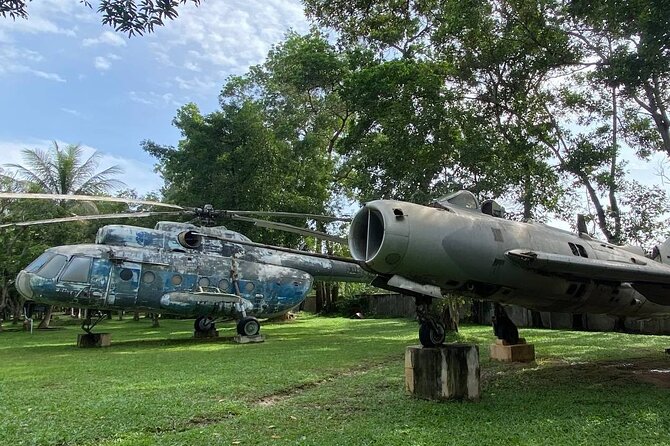
- The War Museum is the longest history stop: Allow about 90 minutes for its collection of war artifacts, tanks, helicopters, and personal stories.
- Wat Thmey is a memorial site: The visit lasts about an hour and offers a chance to reflect on the Khmer Rouge period.
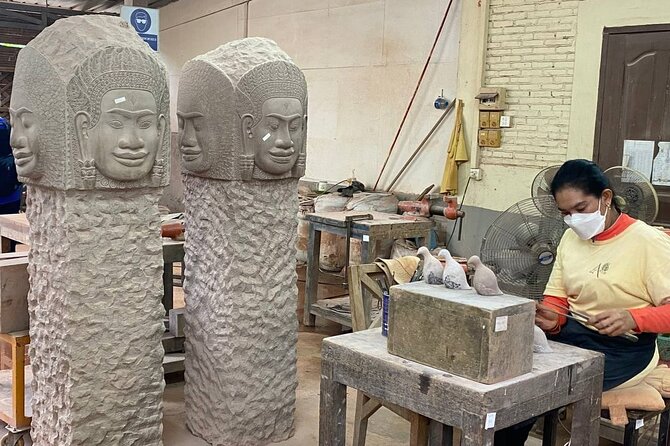
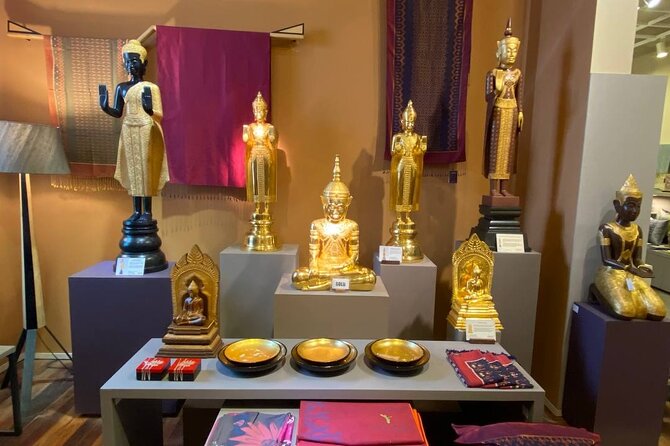
- Artisans Angkor connects craft with livelihoods: You can watch Cambodian artisans at work and see traditional products being made.
- The Old Market gets the most time: Plan on about 90 minutes to browse local goods, produce, and other market wares.
- Your transport and key admissions are covered: Hotel pickup and drop-off, an air-conditioned vehicle, bottled water, and entry to the War Museum and Wat Thmey are included.
- Lunch is not included: The tour costs $47 per person, and you should budget separately for food and any purchases.
Four stops that tell different parts of Cambodia’s story

The route moves from conflict and remembrance to craft and daily commerce. That mix is the tour’s main strength: you get a short introduction to recent Cambodian history, then see how cultural work and local trade fit into life in Siem Reap today.
The schedule assigns about 90 minutes to the War Museum, one hour to Wat Thmey, one hour to Artisans Angkor, and 90 minutes to the Old Market. These blocks add up to five hours, although pickup and driving are part of the practical day. The tour is offered in the morning, departing around 8:30am, or in the afternoon, starting at 1pm.
More war history tours around Siem Reap:
- Bantey Srei, Kbal Spean and Landmine museum Private Tuk-Tuk
★ 4.7 · 30 reviews - Kbal Spean Trekking Tour with Banteay Srei and Landmine Museum
★ 5.0 · 14 reviews - War Museum, Killing Field and Floating village ( Chong Kneas) Tour
★ 5.0 · 14 reviews
The War Museum: equipment and personal accounts
The War Museum is the tour’s first stop. It sits near National Highway No. 6 in Siem Reap and displays military artifacts, including tanks and helicopters. The collection is intended to help visitors understand Cambodia’s conflicts through objects as well as personal stories from people affected by them.
I would give this stop your attention, rather than treating it as a quick photo break. The equipment can make the scale of conflict tangible, while the personal accounts bring the focus back to people and their lives. An English-speaking guide can help you make sense of what you are seeing, though the exact stories and items covered may vary.
At about 90 minutes, this is the tour’s longest museum visit. That gives you more time here than at the next two stops, but it is still a set visit rather than a full day at the museum. If you want to examine every display at length, you may find the schedule brisk.
Admission is included, which makes the price easier to assess. You do not need to arrange a separate ticket for this stop, and the air-conditioned vehicle helps keep the transition between sites straightforward.
Wat Thmey: a quiet, difficult stop
Wat Thmey is identified as one of more than 300 killing fields in Cambodia, where people were killed during the Khmer Rouge regime from 1975 to 1979. The site is a sobering reminder of the country’s mass violence. The visit lasts about an hour, and admission is included.
This stop asks for a different kind of attention than the museum. Rather than focusing on an assortment of military objects, it brings you to a place associated with the victims of the regime. Keep your expectations measured: this is one memorial visit, not a complete account of the Khmer Rouge period or its lasting effects.
The tour information cites an estimate of 1,386,734 people killed by the Khmer Rouge. Numbers like this give a sense of the scale of the tragedy, but they cannot convey individual lives. If you prefer to learn about painful history at your own pace, consider whether a guided visit and fixed schedule suit you.
For many people, this stop will be the emotional center of the day. I would avoid trying to race through it just to keep the schedule. The hour allows for a meaningful pause, though the tour still has two more stops to reach.
Artisans Angkor: craft with a working purpose
After the difficult history stops, Artisans Angkor offers a shift in subject. The organization works to sustain traditional Cambodian craft industries and provides training and job security for nearly a thousand artisans. During your hour here, you can see artisans at work and browse handcrafted products.
That combination gives this stop more substance than a simple souvenir shop. You can connect the object on display with the skill and labor behind it, and purchases offer a direct way to take home locally made work. You are not required to buy anything, so treat browsing as part of the visit rather than an obligation.
The stop also helps balance the day. You have spent the morning or afternoon learning about conflict and loss; here, you see a practical effort to keep craft skills in use and support livelihoods. It is not a substitute for a broader look at Cambodian culture, but it is a useful, concrete example of cultural work in Siem Reap.
One hour gives you time to watch, ask questions through your guide, and look around. If you already know you want to shop carefully, the time may feel limited, especially with the Old Market still ahead. Keep purchases in mind when you plan your market browsing.
More museum visits around Siem Reap:
- Private Tour: HERO Rats & Angkor National Museum
★ 4.5 · 16 reviews - Siem Reap: War Museum included Ticket and Pickup Drop Off
★ 4.9 · 12 reviews - Half Day War Museum Siem Reap Killing Fields and Artisans Angkor
★ 4.0 · 9 reviews - Angkor National Museum with transport
★ 5.0 · 9 reviews
Psah Chas: time to browse the Old Market
The final stop is Psah Chas, usually called the Old Market. It is a central Siem Reap market used by locals and tourists, with goods that include fresh produce and meats alongside other wares. Admission is free, and the schedule gives you about 90 minutes to explore.
This is the least formal stop of the day. After a guided sequence of historical and cultural sites, you can browse at your own pace, look at everyday market goods, or simply take in the activity around you. The market is a practical place to see local trade up close, though it is also a popular stop for visitors, so it is not a hidden or purely local corner of town.
The time here is generous compared with the one-hour craft visit. You can use it to shop, but you do not need to turn the stop into a buying mission. If you are not interested in souvenirs, use the time to look around and notice how the market differs from the more organized displays at Artisans Angkor.
Because lunch is not included, do not assume the tour provides a meal. The market may offer food options, but the tour details do not specify what is available or whether there is a scheduled meal break. Bring that question to your guide or plan to eat separately.
Is $47 good value?
At $47 per person, the tour bundles four distinct stops, private transport for your group, an English-speaking guide, hotel pickup and drop-off, bottled water, and admission to both the War Museum and Wat Thmey. The private format is especially useful if you value traveling with just your own group rather than joining strangers on a shared outing.
The price is not simply paying for a vehicle ride. You are also paying for a guide to connect the stops and for the convenience of reaching several sites in one half-day. If you arranged each visit independently, you would need to plan transport and confirm museum and memorial entry on your own. The package makes the day easier to organize, though it does not include lunch or admission to any other stop beyond the two named sites.
The schedule is also part of the value. A morning start at 8:30am or an afternoon start at 1pm gives you a defined half-day plan, leaving other time available for Siem Reap. If you want a slow, extended visit at each site, however, this is not the right format. It is designed to give you a broad introduction in five hours.
The experience is highly rated, with a 4.9 score from 27 reviews and a 96% recommendation rate. One detailed account describes an informative guide and driver who were accommodating, and says the tour worked well as a first-day introduction to Cambodia. That is a useful way to think about the outing: a strong orientation, not a complete account of the country.
Private transport makes a compact day easier
This is a private activity, so only your group participates. That makes it easier to keep the outing focused on your own party, though the exact vehicle size and the amount of time spent driving between sites are not specified. An air-conditioned vehicle, free hotel pickup and drop-off, and bottled water are included.
The English-speaking guide is a central part of the experience. The stops cover subjects that benefit from context, particularly the museum and Wat Thmey. No guide’s name is provided, so you cannot request a particular person based on the information available.
You can choose between a morning departure at 8:30am and an afternoon start at 1pm. The morning option gives you the rest of the day afterward; the afternoon option lets you spend the morning on other plans. In either case, the tour lasts about five hours.
The tour is commonly booked about 27 days ahead on average. That is a useful planning reference, not a requirement to book that far in advance. The activity offers free cancellation up to 24 hours before the start time; cancellations made within 24 hours are not refunded, and changes inside that window are not accepted.
Who will get the most from this tour?
I would choose this tour if you have a half-day to spare and want more than a temple visit. It brings together Cambodia’s recent history, a memorial site, a working craft center, and a central market, with transport and key admission costs handled in advance.
It should suit you particularly well at the start of a Siem Reap stay. The mix gives you several reference points for understanding the city, and the private format keeps the route simple. It also suits people who value having an English-speaking guide for historical context and prefer a planned outing over arranging several stops themselves.
Think twice if you want a full, unhurried visit to the War Museum, a long discussion of the Khmer Rouge period, or a dedicated shopping excursion. The five-hour schedule has to keep moving. Also consider your comfort with visiting a site connected to mass killings: Wat Thmey is an important stop, but it is not light sightseeing.
Should you book it?
Book this tour if you want a practical, guided introduction to Siem Reap beyond Angkor, especially if the mix of history, craft, and local commerce appeals to you. At $47, private transport, an English-speaking guide, hotel pickup and drop-off, bottled water, and two admissions make the outing a straightforward half-day value.
Skip it if your priority is a slow visit to one site or if you would rather explore the market and craft center on your own. For a first day in Cambodia, though, the route offers a thoughtful balance: hard history first, then a closer look at work and daily trade.
FAQ
How long does the tour last?
The tour lasts about five hours.
What are the tour start times?
The morning tour starts at 8:30am, and the afternoon tour starts at 1pm.
Is the tour private?
Yes. Only your group participates.
Is hotel pickup included?
Yes. Free pickup and drop-off at your hotel are included.
Is an English-speaking guide included?
Yes. The tour includes an English-speaking guide.
Which admissions are included?
Admission to the Siem Reap War Museum and Wat Thmey Killing Field is included.
Is admission to the Old Market included?
The Old Market stop is listed as free admission.
Is lunch included?
No. Lunch is not included.
What is the price per person?
The listed price is $47 per person.
Can I cancel for a full refund?
Yes, if you cancel at least 24 hours before the experience’s start time. Cancellations made less than 24 hours before the start time are not refunded.
New tours in Siem Reap
- Private Transfer From Siem Reap Airport to Hotel★ 5.0 · 16 reviews
- Siem Reap Food Tour By Local★ 5.0 · 29 reviews
- Siem Reap Airport Transfer with Fast Track Immigration Service★ 5.0 · 22 reviews
- Angkor Wat Temples & Kulen Elephant Forest Day Tour★ 5.0 · 6 reviews
- Cambodia 7 Days Tour from Siem Reap to Battambang and Phnom Penh★ 5.0 · 15 reviews
- Siem Reap Airport Taxi Transfer – City Center Hotels★ 5.0 · 5 reviews
- Siem Reap Angkor Airport to Siem Reap City by Shuttle Bus★ 5.0 · 6 reviews
- Siem Reap Airport Transfers★ 3.0 · 4 reviews
More Siem Reap War Museum Tours worth a look.
Bantey Srei, Kbal Spean and Landmine museum Private Tuk-Tuk
Read our review →
War Museum, Killing Field and Floating village ( Chong Kneas) Tour
Read our review →
Kbal Spean Trekking Tour with Banteay Srei and Landmine Museum
Read our review →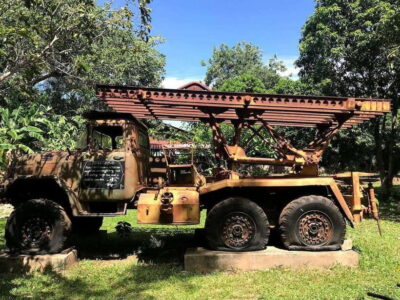
Bantreay Srei , Kbal Spean and Landmine Museum with Tuk Tuk
Read our review →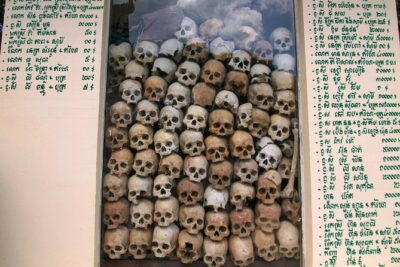
Half Day War Museum Siem Reap Killing Fields and Artisans Angkor
Read our review →
Private Banteay Srei Kbal Spean Tours and Landmine museum
Read our review →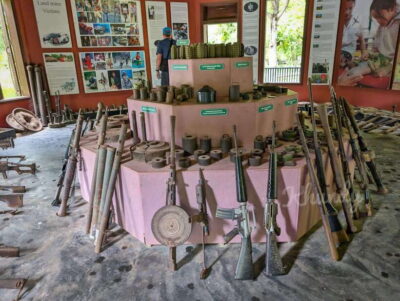
Also listed under